


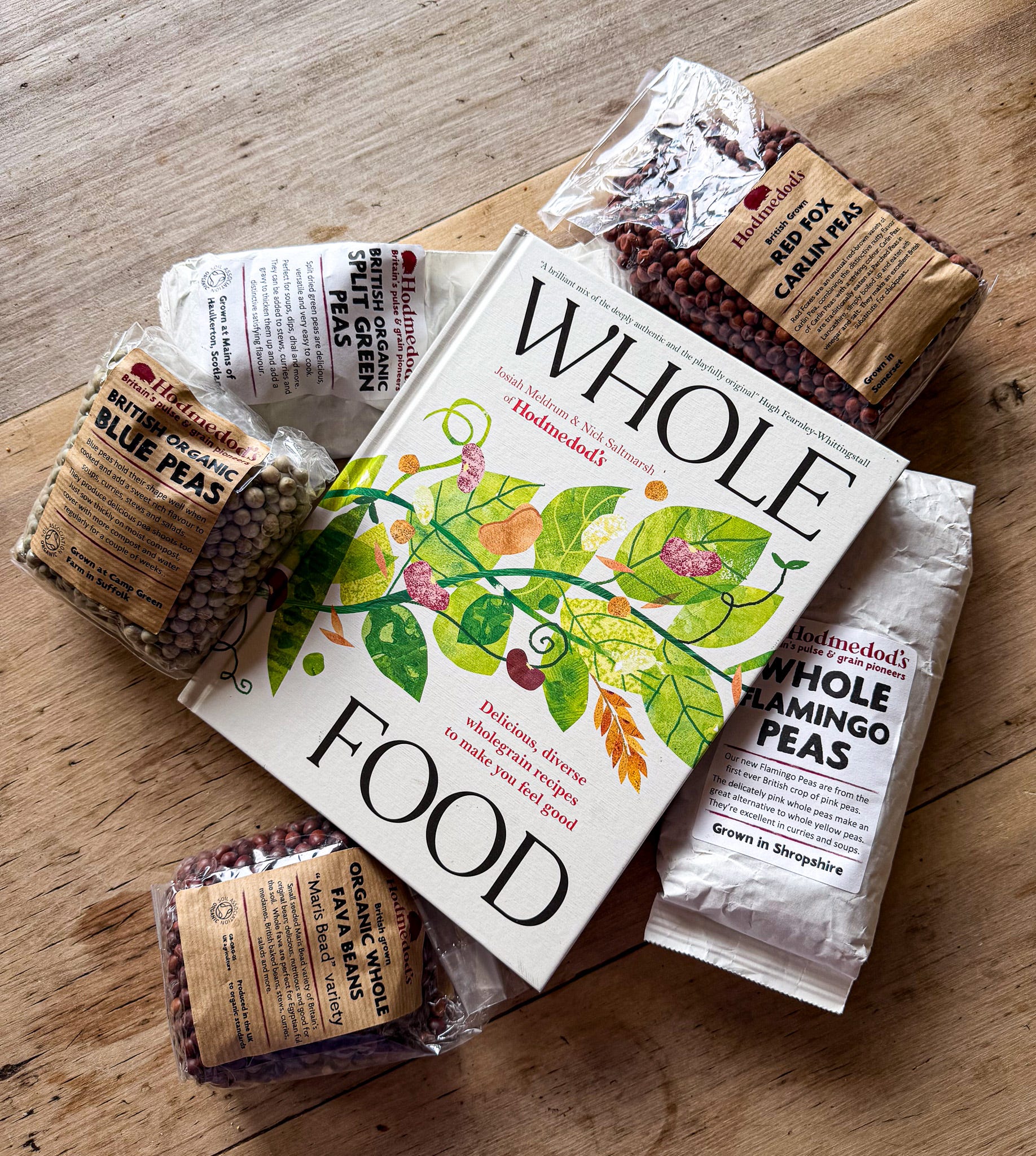
A hodmedod is a small, curled up creature, a snail if you live in Norfolk, a hedgehog if you live in Suffolk. It is the chosen name for the company set up in 2012 by Josiah Meldrum, Nick Saltmarsh and William Hudson, and run today by Nick and Josiah.


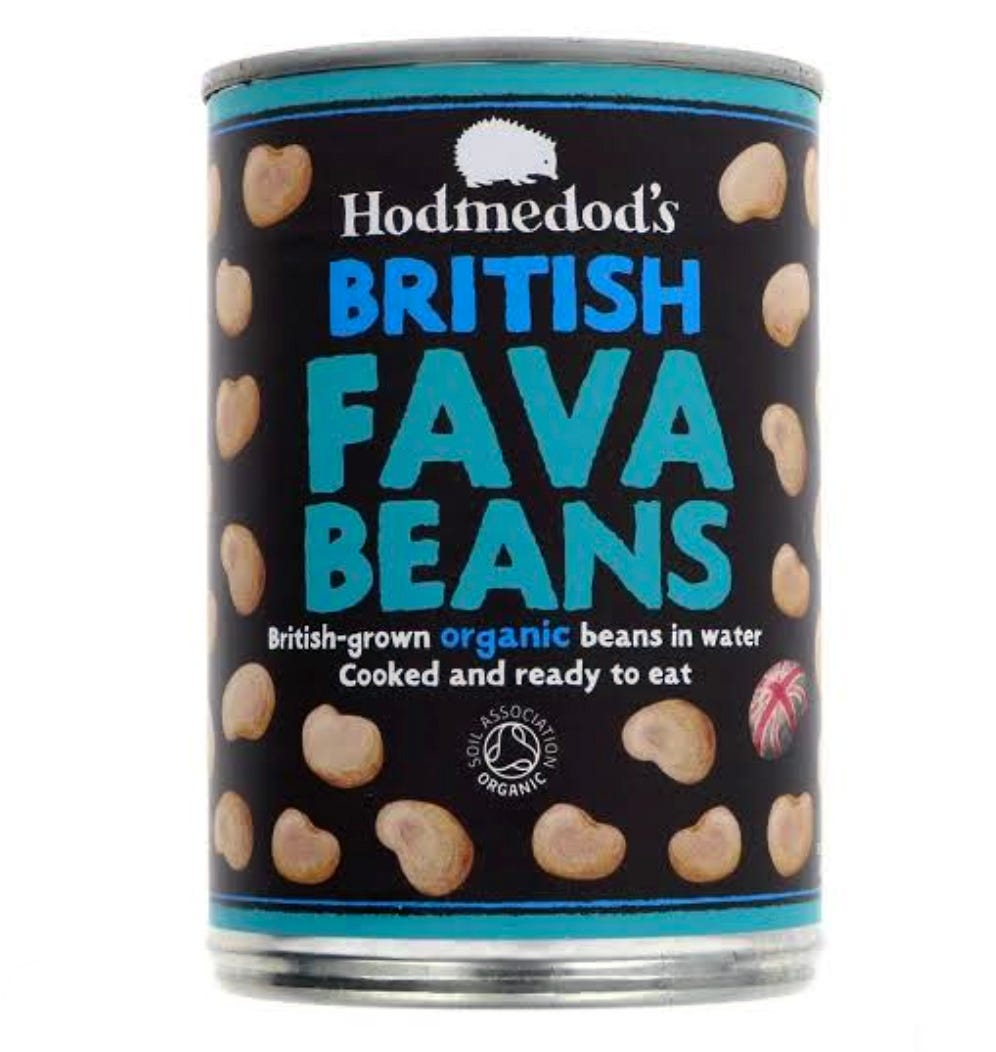
You might know the name if you ever shop in Holland & Barrett and have bought some of the peas, beans, grains and pulses which are the Hodmedod’s stock-in-trade.
For almost 25 years, the company has been attempting to answer a question: how might Norwich feed itself in a healthy, fair and enjoyable way?1
That is a question which people should be asking in Ireland right now, and we have a lot to learn from what the Hodmedod’s team have discovered after the best part of a quarter-century.
What did they find? Simple. “Over the years, we’ve come to understand that there are no easy answers, but there is a simple mantra: diversity.”
One little word. The problem is, diversity is the opposite of what we have been doing in Ireland with our food system over the last 25 years. We have built a system which is mistakenly named Agri-culture when what it should be called is what it really is: Agri-business.
Agribusiness and Agriculture are not one and the same. They aren’t even bedfellows. Realistically, they are opposites. Agriculture, as its name says, is the practice of working with the natural world in an informed and sympathetic way, adapting to local micro-climates with intelligence and adaptation. It is, fundamentally, an emotional calling.
Agribusiness, however, sees land and climate as capable of extraction and capable of producing uniform products which can be sold at a profit. There is no emotion involved. There is simply calculation.
In Ireland, this system is focused on exporting food to other countries who want our superb milk and beef. We, in turn, buy their arable crops and fruit and their mass-produced foods, such as battery chickens. Expecting anything else is naive. Agribusiness is very profitable for Ireland.
In our own experience, the last time there was someone in Government who was really invested in the state of Irish Agriculture, that person was Charles Haughey. Bet you weren’t expecting that.
In his splendid 1989 protest song, Rockin’ in the Free World, Neil Young sang: “There’s a warning sign on the road ahead.” We have plenty of people in Ireland who can see and read that warning sign about the state of our Agriculture.
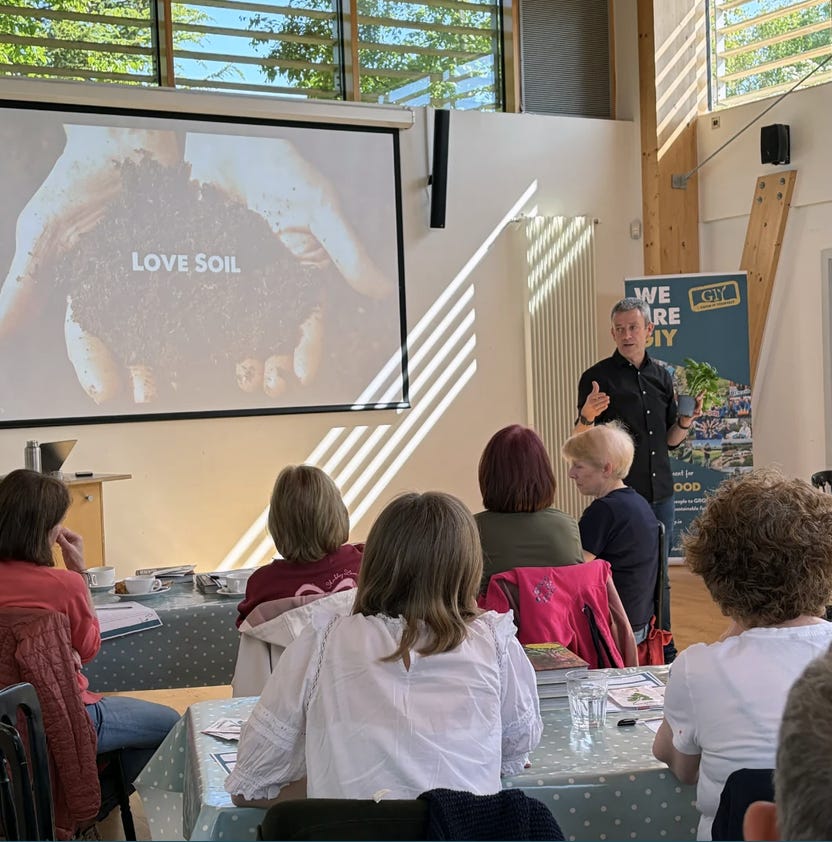
Michael Kelly’s GIY celebrates 10 years of activism and good growing today, October 22nd, and have ambitious plans for creating a better food system for us all. Darina Allen and the steadfast folk in the organic and bio-dynamic societies have never ceased to point out our weaknesses when it comes to food quality, health, food security, sustainability and our environment. They have been joined by our craft bakers and growers of native grains, who understand the vital links which grain, flour and bread play in any eco-system.2
This is good, but it’s not enough. As Nick and Josiah point out in Whole Foods, the fantastic new book from the Hodmedods team, what is needed is “an agroecological transition.”
What does this mean? It means a whole-system change, and a move to the use of ecological principles in contemporary farming. Agro-ecology used to be a niche term that never got much beyond academia, but in recent times it has become a currency when discussing farming and food.
However, as Hodmedod’s point out, “For agroecology to have a meaningful impact it has to reach beyond the farm gate.”
How to get beyond the farm gate? Well, crisis will push us far beyond the gate but, if we heed the warning signs on the road ahead about climate change and food security, then we will solve the problem before we are consumed by a crisis of combined climactic factors. In a small country like Ireland, change can happen because of just a couple of people, but those people need to be in the right place. Ideally, they need to be in government.
That isn’t going to happen.
Mick Kelly didn’t set up GIY a decade ago because there were so many smart initiatives in the field of food production coming from the Dept of Agribusiness and Teagasc. Myrtle Allen didn’t helm the Cork Free Choice Group for decades because she so admired the Department’s wish to close scores and scores of local abattoirs.
The answer, as with Hodmedod’s, will have to be local. If you want a diverse food culture, then it’s DIY, or GIY. Cork on a Fork and Legenderry other local food dynamos will hopefully expand their brief to go beyond festivals and to begin to create local food cultures and communities, in the places where the Department of Agribusiness only wishes to see food commodity producers.
What’s the win, should this happen?
Part of the answer lies in the pages of Whole Food, Nick and Josiah’s book. There are dozens of recipes for gorgeous dishes made with peas and pulses and grains, dishes which enrich the person whilst preserving and protecting the land: win/win.
And working with Hodmedod’s has also been life-changing for many of the farmers who supply the Hodmedod’s outfit, allowing them to know where their food is going, rather than disappearing into a commodity black hole.
Diversity and Agro-ecology solve problems. Agri-business creates problems.
1 Tasked by a community group called Transition Norwich
2 Irish Organic Association. Biodynamic Agricultural Association of Ireland. Real Bread Ireland. Irish Grain Network.
Whole Food is published by DK Books.
Related:


