Amai by Viktor
The new Brazil in Ireland
Amai is the face of the new Brazil.
Ireland has had a productive relationship with Brazilians for decades. Gort, in south County Galway, was once known as “Little Brazil”. Today, the Brazilians who are living and working in Ireland are creatives like Viktor Silva, co-owner and chef of Amai, on Dublin’s Harry Street, across from the Westbury Hotel.
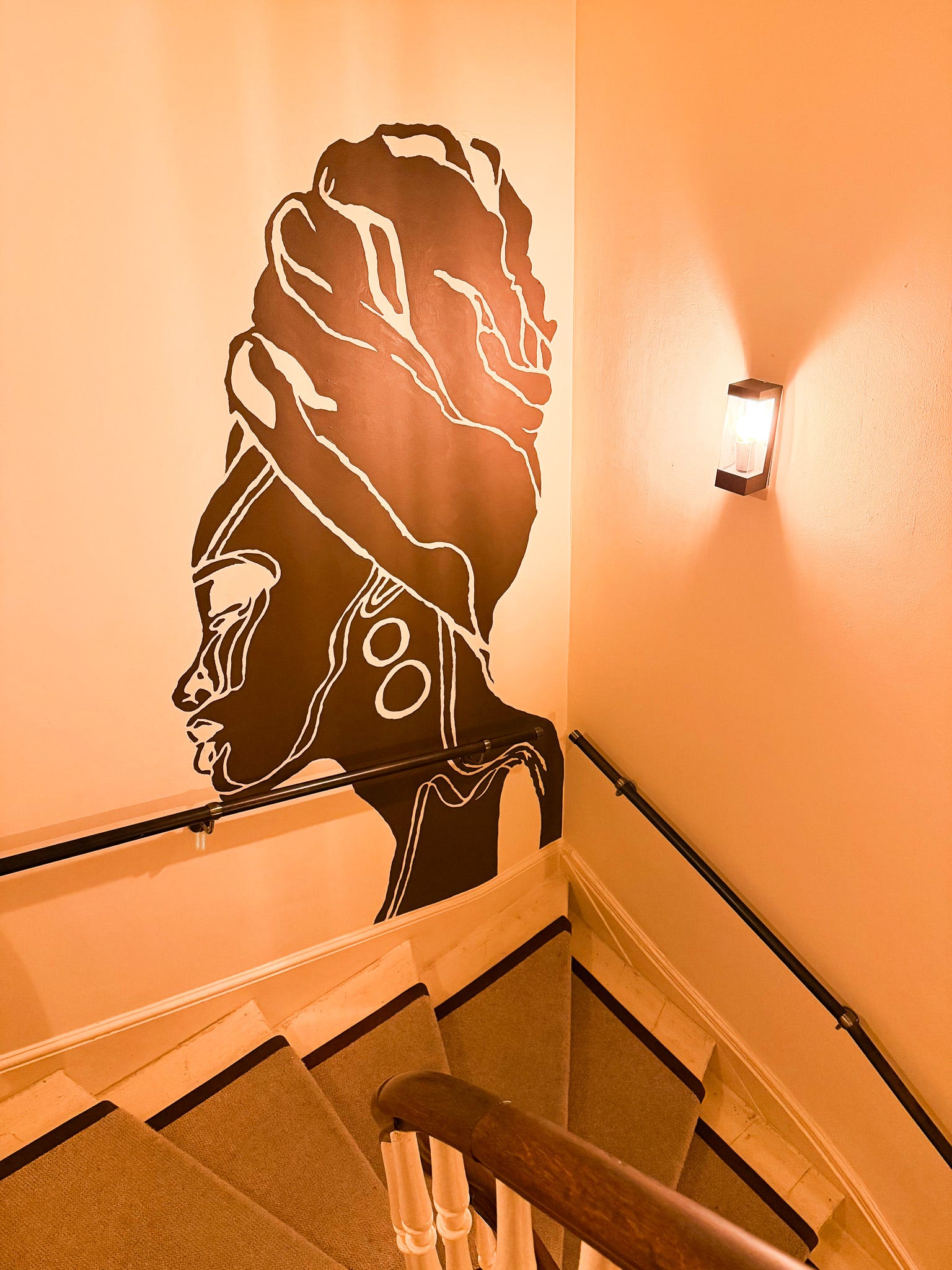
Viktor Silva is not just a cook and restaurateur. He is also a very fine painter – check out that adorable mural on the stairs – and he is a multi-instrumental musician – check out that guitar resting on the wall between the dining rooms.
Like the other talented Brazilians living and working in Ireland and Europe, Viktor is ambitious. He might have opened a place offering Brazil’s Greatest Hits: think feijoada, seafood moqueca or picanha steak. But that is not what Amai is about.
Whilst there are many Brazilian staples dotted throughout the menu – there is a feijoada cake; acai, brigadeiro, and erva mate, there is cachaca and tupinambo – the cooking takes the template established by Alex Atala, Brazil’s best-known chef, of “old flavours in new ways” and undertakes a transformation of the staples of Brazilian food into novel results. Amai offers these transformations on an €89 eight-course menu, which changes seasonally and which is currently in the process of changing to a new Spring menu.
The room is divided in two, and features a second fine mural at the pass. This – of Brazil’s hillside Favelas, was also painted by Viktor. There are musical instruments, and other vivid paintings in the two rooms, painted by Viktor’s aunts. One room is dominated by a wall-long banquette, fleshed out with oversized cushions.
This week, the March Spring Menu is imminent. Viktor spends months preparing for a new menu, which then runs for a season. The menu on our recent visit was the Winter menu, carried over into the the new year and to the beginning of March. It featured ingredients like Brussels sprouts, venison and guinea fowl. It’s understandable that a kitchen wants time to polish dishes, but cooking the same things for three months does sacrifice spontaneity.
With our view through the Pass, two things are immediately striking. The first is that the kitchen team look supercool, wearing funky t-shirts boldly decorated with the mural that greets you on the entrance stairs. The waiting staff however, in a nod to the formality of the restaurant, wear hospitality waistcoats and, occasionally, white gloves, along with their sneakers. We’d love to see the t-shirts used front of house: they’re so cool, they could be sold as merch, and we’d be buying.
Secondly, despite the fact that Brazil is actually a major producer of wine, in particular much-appreciated sparkling wines, there are no Brazilian wines on the list. As the restaurant is partnered with the Corkscrew wine shop downstairs, this seems like a missed opportunity. We drank the Meandro, from the Douro Valley in Portugal, which offered at least a little linguistic link with Brazil.
Another unexpected culture clash came from the music - loud and rocky, while we were yearning samba and bossa nova.
Of the three snacks that begin the meal - a little pastry of salmon with wasabi; foie gras with mushroom and cherry; and a little cake of feijoada with coriander and chilli – it was the Brazilian croquette that stole the show, an unctuous miniaturised rendering of the classic bean stew.
The starter dish of cabbage with Brussels sprouts, stuffing and miso was beautifully underpinned by the miso sauce, the cabbage unfolding in crisp layers, good winter food.
The bread course is served on its own, a rich brown brioche with smoked culture butter, and someone in the kitchen has baker’s hands because this is a killer concoction, light as air, the smoky butter balancing out the sweetness.
The guinea fowl was served atop a toasty risotto of barley, and the addition of lardo and an XO sauce made for an exceptionally rich dish. In earlier Amai menus this was a fish course, which would have better suited the following dish of venison with coffee, cocoa, a celeriac purée and a winning acai jelly.
Viktor has added a pre-dessert to the menus, a little spoonful of mandarin and lemongrass, scattered with ground erva mate. The full dessert dish then addresses the chef’s passion for the concept of soil. “Brazilian roots, in Irish Soil,” is the tag line of the restaurant, and here it was brought vividly to life as a dessert of tupinambo – jerusalem artichoke – garnished at the table by a “soil” of dark chocolate and then black truffle. A bit of theatre to make a point about the agricultural underpinnings of the restaurant, despite its formal service.
Final petit fours once again leaned into Brazilian heritage and included a brigadeiro and some fermented sugarcane – Cachaça jelly.
Amai has moved fast during its first nine months in Dublin, and we would wager that it will continue to move fast as the Brazilian roots/Irish soil philosophy of the cooking evolves and mutates in interesting ways. It is already a radical place, and with more experience we expect those roots to penetrate even deeper into the soil.
Related: