


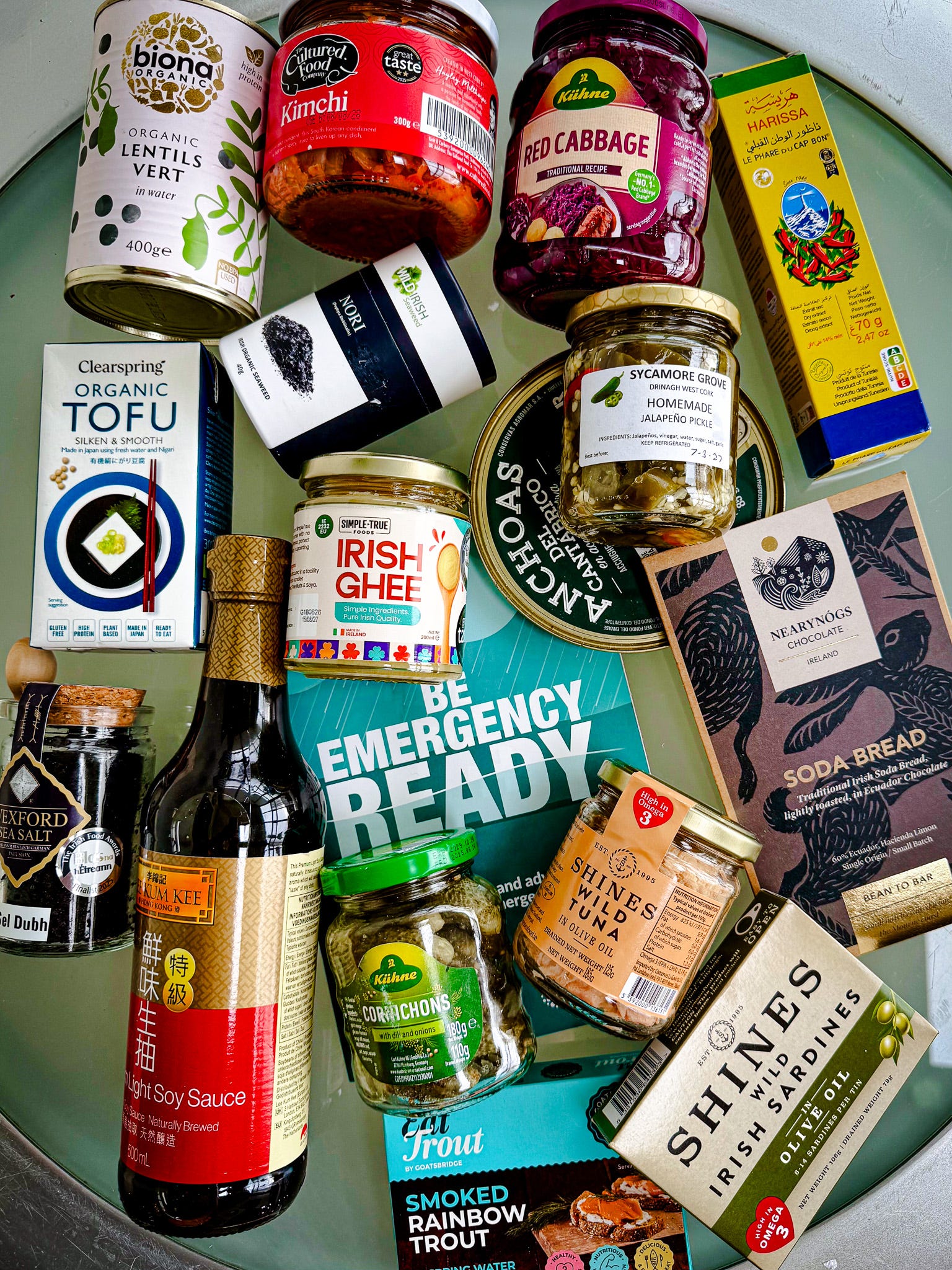
Readying your home for an emergency is in the news right now, but in fact the first Preparedness Strategy document was put together back in March 2025, when the EU recommended that people keep enough essentials to cope for at least 72 hours.
Most countries in the EU have now issued population-preparedness guidelines, and it’s time to pay attention. In a week that saw all planes in America grounded, and shut Microsoft off for over two days, it’s becoming more and more obvious that things can happen quickly, things that we, or indeed anyone, have no control over.
Being prepared can actually be a rewarding and interesting endeavour. We reckon you can go into this with good natured curiosity rather than panic. How to be prepared using the very best ingredients that are available and will store without electricity, things that can be eaten with good heart when the world around you gets shattered.
Government pamphlets, like the recent Irish “Be Emergency Ready” don’t go into a lot of detail, non-perishable is the only watchword, along with 2-3L of water per person.
Anyone who lives in the remote Irish countryside, like ourselves, will already be half way there to preparedness. Out West, when we lose power, which we do often, we lose everything. No light, no heat, and worse, no water for drinking, washing or flushing. That’s why at the news of any approaching storm we fill the bath, turn the wheelbarrows right way up to collect rainfall, and have a good larder and a lot of torches on hand. Nobody is suggesting in these EU and global directives that we are facing armageddon. They’re just saying: be smart, emergencies happen.
So - here’s our checklist to have ready a good selection of non-perishable food that doesn’t rely on the likes of Heinz and John West. There’s so much good stuff out there, just look on it in a different light. This is the food that’s going to be there to sustain you. Rotate it to make sure nothing goes past it's expiry date, and in the case of an actual emergency, eat the food from the fridge first, then the freezer, before you turn to your delicious and carefully prepared larder.
First tip: If there are spaces in your deep freeze, fill them with containers of water. A full deep freeze will defrost more slowly and containers will give you an extra supply of drinking water when you might need it.
These are non-perishable foods that may need water and/or electricity to cook
Basic Essentials
Tinned Fish - Start here, and your go-tos are Shines and Goatsbridge. There are also some great suppliers of French and Spanish companies to boost your store (see Canned Seafood story below). In a crisis, you just can’t do better than a sardine, they are a powerhouse of nutrition and can (and should) be eaten straight from the can. Tuna in Olive Oil is also a superb and genuinely delicious. Buy fish in olive oil, not water, as that gives you essential fats to cook with along with the fish.
Rice - Long grain white rice will keep for about a quarter of a century! This is because all the bits that spoil the rice have been removed (they’re also bits that are good for you). Brown rice, which has everything, keeps for about a year.
Beans & Peas - Pulses, Beans and Peas are the heart and soul of your store cupboard. Black beans are robust, and love the spices that will add cheer. Split peas don’t require soaking. Tinned Chickpeas can be ground into a hummus (make sure to have a jar of Tahini). Lentils are a source of protein, buy canned and you won’t need more water, both fresh and canned can be made into a soup or a stew with some spices that should also be in your store cupboard - cumin, ground turmeric, paprika. Beans and rice together with a bit of added fat and spices, and you have a proper meal that has sustained people all over the globe for centuries.
Flour & Oats & Grains - remember Covid and the shortage of good flour? Then we all bought huge bags of it, which of course didn’t help, because flour only has a shelf life of about six months. Rolled oats last longer, (about two years) and can be used as a thickener, as well as being eaten cold or hot. Whole wheat berries last decades, and can be cooked and used in salads (including spelt berries). Freekeh and Farro are all part of these grain-based meals, along with Barley. We add barley flakes to porridge regularly. Cous cous cooks quickly without needing much water, and has a shelf life of more than a year.
Fats - Fats are essential because many vitamins are only soluble in fat, not water. Think coconut oil, tallow and ghee - which is butter that can be held without refrigeration because all the moisture has been removed.
Seaweed - local Irish seaweeds can be brought back to life with a tiny amount of water. Adding them to food packs both a nutritional and flavour punch. Have some Asian ingredients in your store as well, including rice vinegar, toasted sesame oil, light soy sauce and sesame seeds. Look out for Organic Silken Tofu, which is ready to eat, high in protein, and doesn’t need refrigeration.
Vitamins - consider buying a jar of multi vitamins if your diet becomes limited.
The Delicious List
These are things that will make you feel a whole lot better about life, as they’ll make everything taste edible at the least, delicious at best.
Nut Butters - need nothing, other than perhaps a cracker. They’re energy rich and full of fibre, protein and essential minerals.
Kraut and Kim Chi - Pasteurised will last longer, but raw and artisan taste better and carry more nutritional goodness. Maybe go for both. These are full of vitamin C.
Canned Tomato paste, tubes of Harissa, sweet sour Pomegranate Molasses, an Irish brand of chilli sauce or ketchup. These are store cupboard essentials that make simple things taste better.
Miso Paste - top of your list. Homemade lasts for ever, and shop bought does a great job making so many things taste better. Also consider Katsuobushi and Dried Shiitake.
Good Irish Sea Salt - Elevate every experience by adding a brightness to all you eat.
Good quality dark Chocolate - All the better if it’s bean to bar and made locally. Dark chocolate is a known mood enhancer, that fights depression.
Here’s some equipment that it might be good to have if things go pear shaped:
portable gas stove - a Kelly kettle - a wind up radio - a power bank - a pressure cooker - a generator if you’re running a business
It’s time for everyone to give some thought to this. Our system of Just-In-Time in Supermarkets make supply chains very, very fragile. All adults have now lived through a global pandemic, the power cuts after Storm Éowyn, and now hybrid warfare. AI is also troubling many people.
So - tell us what you’re putting in your store cupboard? We’d love to hear more suggestions.
~SMcK
