


The great Chez Panisse chef Paul Bertolli calls it “cleaning the fresco.” It’s where a cook searches for the soul of a dish, making it taste like something freshly minted. For Bertolli, the dish was the traditional Italian soup of ribollita, made by a Tuscan restaurateur who “had attempted to make the original tastes vivid again in his cooking.”


Bertolli explains: “I now had a metaphor for the type of cooking that made sense to me: food grounded in a tradition, yet enlivened by the act of greeting the process and the ingredients anew. In Italy too I learned that cooking, based on a sensual deference for the essence of food, called for restraint in both mind-set and method: it was a matter of deciding not what to add, but what to allow to be.”
If you feel you have a hankering for cooking that is “based on a sensual deference for the essence of food” and which is predicated on what a chef allows to be, then we have good news.
You will find that cooking in Lignum, a groovy room just outside sleepy Loughrea in east County Galway where Danny Africano and his team have been getting better and better, year on year. This is cooking that touches parts of your psyche in ways that other chefs cannot reach.
Bertolli’s key ingredients – tradition; process; sensual deference; restraint; mind-set and method; allowing things to be – are all present and correct in Lignum. Mind you, that’s not entirely a surprise, because Africano unites both an Italian and an Irish heritage, his food rooted in the volcanic soils of Pompeii just as much as it is rooted in the boggy stretches of County Galway. Danny Africano has taken this twin heritage, and cleaned the fresco of each.
Lignum food gets straight to the essence of modern cooking and eating. Sure, Danny and Molly and the team have all the signature modern tropes at their fingers – a Zen space clad in shou sugi ban wood; greenhouses in the grounds; stars from the Guide Michelin; food cooked over embers in a kitchen that doesn’t look like a professional kitchen; gorgeous natural wines that electrify your reward system.
All of this is present, but it hasn’t ever felt like this is what Lignum is about. Africano’s cooking has always felt anthropological, as if he is examining the whole concept of growing and cooking food. He wants to meet the ingredients and the process anew, and then he wants to subversively make them his own. This is what makes Lignum stand apart, out there with just a handful of exceptionally innovative chefs around Ireland.
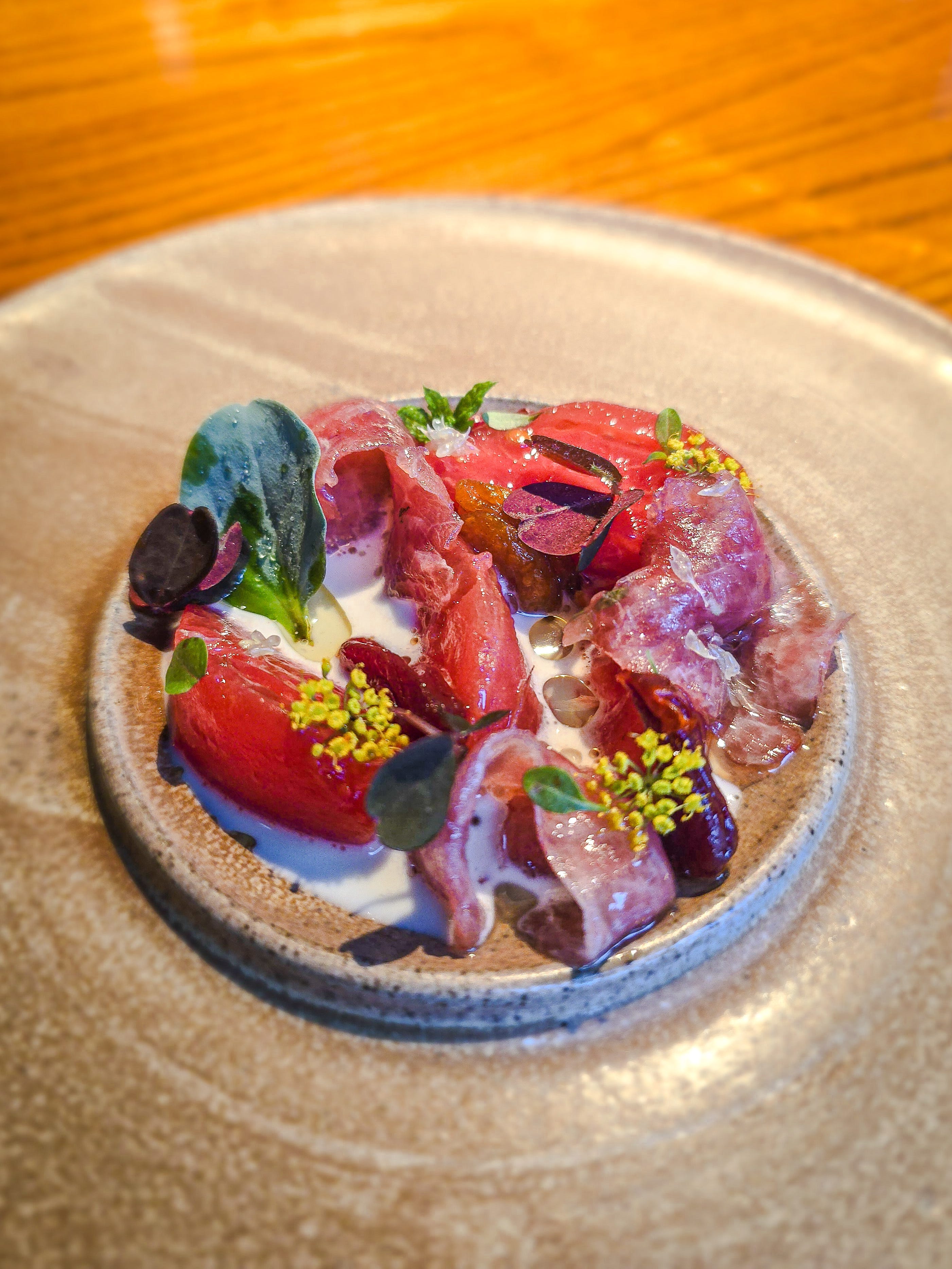
Take the dish which is described on the menu as Otoro|Tomato|Almond. The dish appears superficially straightforward: slices of tuna, tomatoes from the greenhouse with some basil leaves, a scattering of almonds. It is an exercise in restraint, yet it does something remarkable: each ingredient is allowed to be itself, exquisitely. But then, in combination, the ingredients are mind-blowing, a series of soloists converging into the harmony of a choir. How do you do that?
Lignum does it like this: the tuna is sourced from West Cork, and is served raw with extra-virgin olive oil from Campania. The sauce is based on almonds sourced from Puglia. The almonds are soaked overnight and are then pressed to give the kitchen their very own ‘almond milk.’ The tomatoes are semi-dried, archetypal summer tomatoes from the glasshouse in the Lignum garden, and they are dressed with a blackcurrant wood oil. Finally, the dish is finished with fresh basil and finger lime zest, harvested from the garden.
But here’s the rub: this complex procedure doesn’t obscure the flavours, it clarifies them. Africano’s techniques bring light, contrast, colour and perspective to the dish, illuminating both the individuality of the ingredients and their power to commune with the kitchen’s choice of elements: tuna, almond, tomato. It’s mind blowing stuff, more akin to painting than cooking.


We ate on a Sunday evening, when the menu is shortened, but still ranges through 14 plates and six pairing wines. It is an adventure, and for all the right reasons. First off, it’s terrific fun, not just because the cooking is so precise, individual and cultured, but because Africano has that true Italian gusto when it comes to food.
When he brings out the dish of spaghettoni with tomato and basil, for example, it comes with a big slice of the house sourdough. “Scarpetta!” exclaims Danny, so once you have demolished the sublime pasta, you set to with the bread and mop the plate clean: that’s the scarpetta, and scarpetta is not what you would normally do in the polite realm of tasting menus and “fine dining.” This sort of unshackled behaviour, echoed by other cutting-edge destinations such as Ómós and Comet and St Francis Provisions, shows how Irish cuisine continues to move forward by establishing its own rules of behaviour.
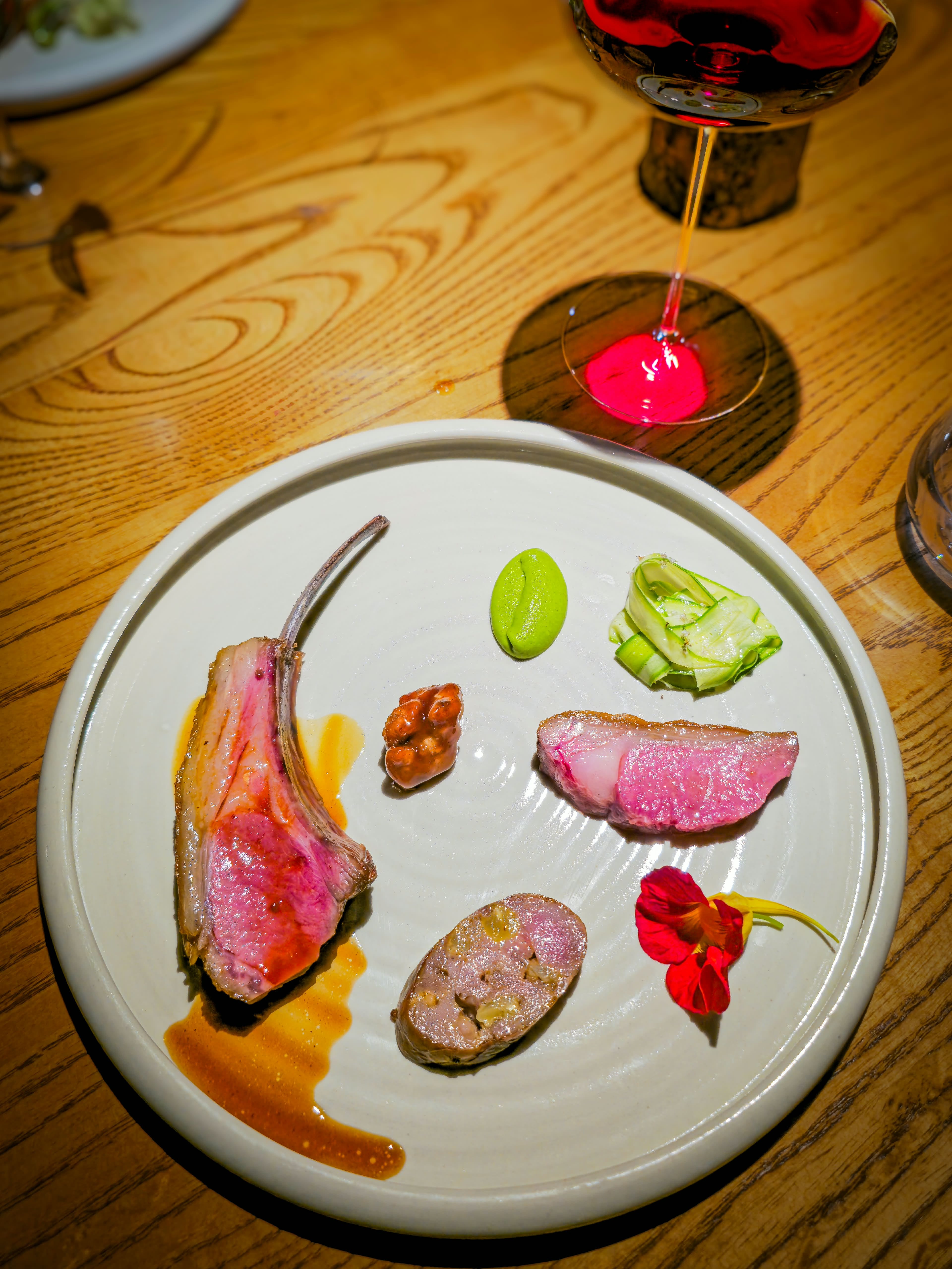
Our meal was a delirium of deliciousness: a tempura of courgette flower; a duo of Killary Fjord mussels with pine nut dressing; a tumble of lobster with pine nut, and later lobster tail from Union Hall with elderflower; venison tartare with black garlic; the most perfectly grilled mackerel with ponzu; lamb loin and lamb sausage with nasturtium; an astonishing dish of chocolate with coffee and Cashel Blue which looked like the eye of Sauron; twin Amalfi lemon desserts; and finally a sfogliatella, a shell-shaped pastry which hails from Campania. The procession of plates was perfectly judged, and the wine pairing was a textbook exercise.
The other great adventure of dining at Lignum is arranging a place to stay for the night and a taxi ride to the restaurant. We stayed at the nearby Meadow Court Hotel, which offers all the surrealism of an episode of Twin Peaks in a rural County Galway field. Our taxi driver was Pat, of Loughrea Taxis, who filled us in with all the local news as he took us to and from the restaurant. Honestly, you couldn’t pay enough for this sort of craic.
Lignum is its own creation: what you find here you will not find anywhere else. The fusion of two cultures in Lignum means a true third culture has been created by what Danny and Molly and the team are doing.


As we were enjoying dinner the thought that kept buzzing in my head was that the food and wine in Lignum had something of the anarchic rhythm of Igor Stravinsky’s infamous The Rite of Spring, which premiered to a near-riot reception in Paris in 1913.
The wildness and liberation of Danny’s cooking means an evening in Lignum gives you a taste of The Riot of Spring, bounteous ingredients cooked with true understanding, with the traditions of cooking reformed into avant garde inventions, full of surprises and “a sensual deference for the essence of food.” It’s a wild ride, so strap in.
~JMcK with photos by Samuel McKenna
Related:

