


For most of the twentieth century, Ireland lived in the nineteenth century. Our agrarian economy stumbled along, largely untouched by the modern world, and it was only after 1973, and the country’s accession to the (then) European Community, that things began to change.
If that was the moment when things began to change politically and economically, then we might ask this: when did Irish cooking step up and enter the twentieth century?
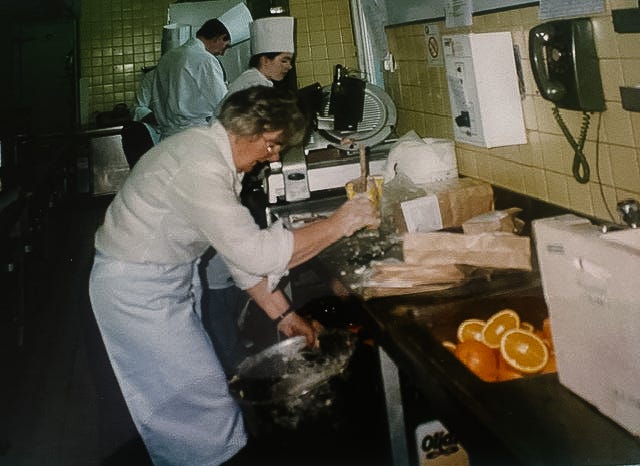
The answer is October 1st 1989, and the first Eurotoques Ireland Dinner, cooked and served in Trinity College, Dublin. We were there.
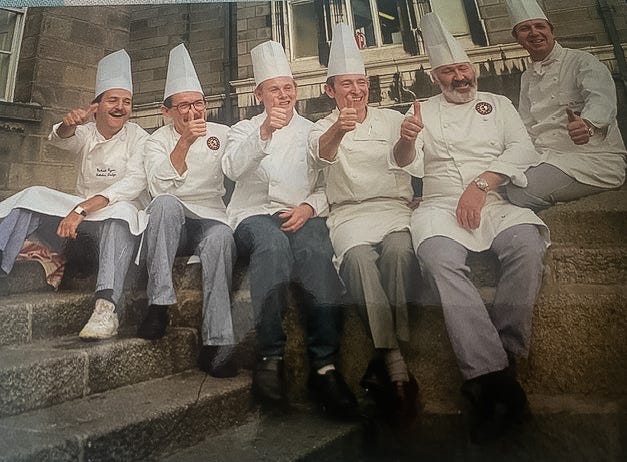
Consider the cast: heading the team is Myrtle Allen of Ballymaloe House, who is also MC for the evening. She is assisted by head chef Eugene McSweeney of Lacken House, in Kilkenny, who is rattling the pans alongside the dream team of Irish chefs: Michael Clifford of Clifford’s in Cork city; Michael Ryan of Arbutus Lodge in Cork city; Gerry Galvin of Drimcong House in Galway; Aidan McManus of The King Sitric in Howth, County Dublin, and Colin O’Daly of The Park, in Blackrock, County Dublin.
“I equate that night in Trinity College with one other event that happened in the mid 1970’s to be pivotal in creating the platform for Irish Chefs, Irish Cooking and local producers to be recognised as being amongst the best there is,” recounts Eugene McSweeney. “That event was the very first London City & Guilds 706/3 Master Chefs course that started in Cathal Brugha Street, Dublin. I was lucky to be on the first 3 years course.”
These chefs are the Galacticos of Irish cooking in 1989. Chef-patrons who have charted the path away from the Everything-in-French rulebook that dominated Irish cooking, towards a native style of contemporary Irish food. They were amongst the first marquee name chefs Ireland had produced, following the lead of others like Declan Ryan and John Howard.
The menu that night, as recounted by Eugene McSweeney who was prompted to write after our mention in a recent ‘Stack of Gerry Galvin’s infamous black pudding dish, was as follows:
Native Oysters with Black Pudding in a Mustard Sauce.
Sorrel and Chervil Soup.
Terrine of Crab and Scallops with Sea Urchin Cream.
Roast Loin of Wicklow Venison with Winterberries and Madeira Sauce.
Selection of Farmhouse Cheese.
A Trio of Desserts.
Our notes from the night record that there were snacks created by Michael Ryan to begin – smoked winkles in pots; organic tomatoes stuffed with eel mousse; game skewers – alongside which we were served Tattinger Brut Reserve.
The dinner then began with the great surprise that was Gerry Galvin’s decision to serve Clonakilty black pudding alongside Irish oysters, the dish fleshed out with apple in a grain mustard sauce. Edward Twomey had worked tirelessly to promote Clonakilty black pudding, and here was the vindication for his persistence: first course at the biggest formal Eurotoques dinner. The decision also shows Gerry Galvin’s punky genius, and his love of juxtaposition and iconoclasm.
Michael Ryan stepped up again with a garden sorrel and chervil soup, before Aidan McManus’s dish of terrine of crab and scallop with sea urchin cream. The late Colin O’Daly – then at the height of his fame – offered roast loin of Wicklow venison with seasonal berries and Madeira sauce, with baby vegetables, a very Colin O’Daly, late 80’s vibe.
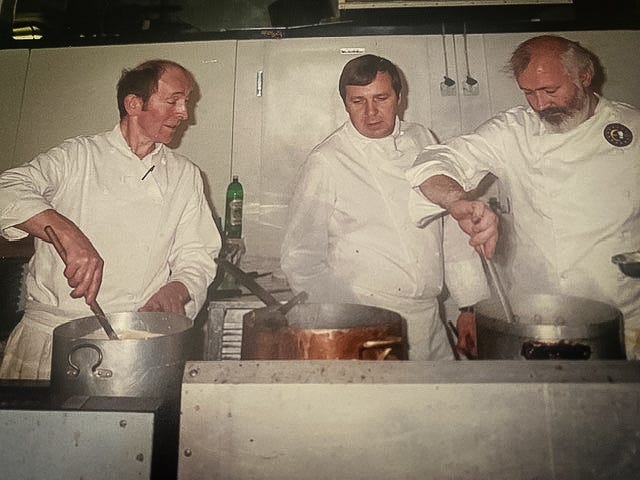
In her address Myrtle Allen pointed out that Michael Clifford had picked the hazelnuts and damsons which were part of his trio of autumn desserts: blackberry mousse; raspberry ice cream; damson tart. The desserts had followed a cheeseboard which offered St Tola goat’s cheese; Gubbeen and Milleens from West Cork; Cashel Blue from Tipperary; and the much-missed Gigginstown from County Westmeath.
“It’s sad we have lost four of our great – great is not even enough to describe these Giants of Irish cooking – people and chefs since: Myrtle Allen, Gerry Galvin, Colin O’Daly and Michael Clifford,” writes Eugene. “You were right in saying that this was a very special event in the history of Irish cooking.”
It was very special because the menu was a road map of where Irish food was in 1989, nascent and subterranean in many respects, yet already coalescing in the hands of extremely talented and creative chefs into a modern Irish larder and a modern Irish table. A few weeks later our first book, The Irish Food Guide, was published, our attempt to gather and describe the people who were creating the modern food culture through their talent and grit.
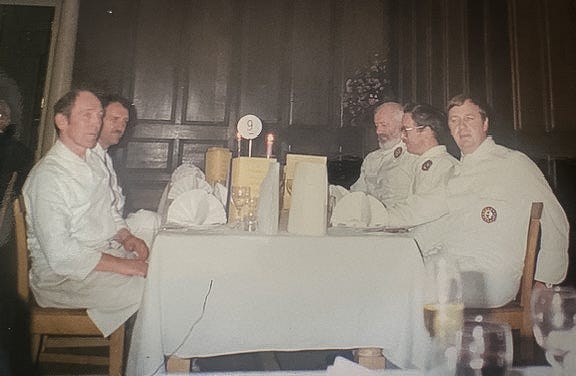
With huge thanks to Eugene McSweeney for sharing these photos.
~JMcK
Related:

