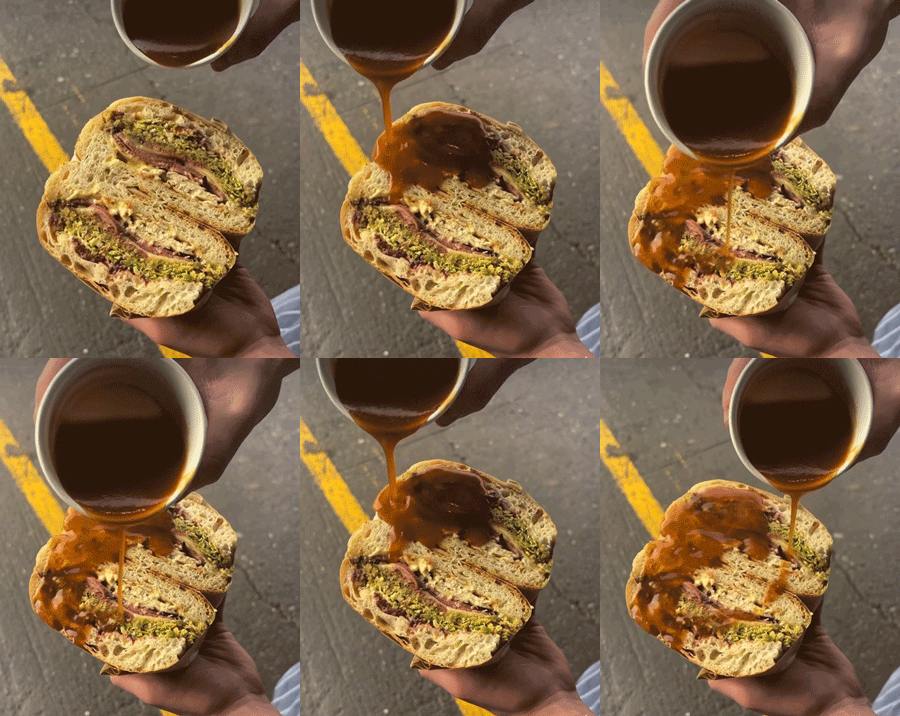
The Gravy Boat
Lubricating the Christmas spirit

Gravy is having its moment right now, whether its coming at you courtesy of the gravy train, or sliding onto something tasty as it pours from the gravy boat.
And as we approach Christmas, gravy’s moment is becoming gravy mania. Christmas dinner and gravy? Yes of course but, these days, look out for Christmas sandwich with gravy, or Christmas pizza with gravy, or soupçons of gravy for dunking your burger.
Gravy as dip, gravy as sauce, gravy with turkey, gravy with beef, Sunday lunch gravy with fish, and always proper gravy. Not jus, not sauce, but brown, thick, umami gravy.
Gravy, gravy, gravy, everywhere you look.
Gravy, the sacred sauce to each and every Sunday household, is primarily born of any roasted joint matured well, lovingly and carefully. Whether topside, rolled brisket or majestic rib these roasting juices may then be combined into that treasured family recipe.
A halved onion, garlic, maybe some rosemary or thyme, all roasted with the meat will add greatly to the end result. A little water or wine included near the end helps release that wonderful, sticky residue, those essential juices, then combined with perhaps a dot of tomato puree and brown sugar.
A touch of vinegar is the magic ingredient that transforms gravy I feel - the decision then is whether to add flour or not. But who doesn’t love that thicker, slower pour of this most treasured accompaniment to the family roast. Time well spent together.
Pat Whelan, James Whelan Butchers
The Stepping Stones
Gravy is good, of course, because it moisturises the prime ingredient – traditionally, the roast. But so does hollandaise, chimichurri, velouté. Where gravy differs from these is that it echoes rather than contrasts the flavour, offering more of the same, only with more intensity.
The irony is, the more you put into the creation of gravy, the more you extract from the roast, and the more you extract from the roast the more you need the gravy.
To avoid taking everything from the roast there are some tricks you can employ, some flavour bombs that bring more life to the party.
Gravy may appear simple but the flavour needs building blocks. First and foremost is the Maillard effect. Here the drippings of roasted food on the hot pan causes the acids to break down into sugars (this differs from caramelisation, which just involves the breakdown of sugars). This is why the first step to making gravy is to scrape the pan.
The breaking down of the acids brings us to another flavour compound - umami. Bring on the umami! Other sources of this precious gift to gravy are Worcestershire sauce, mushrooms or mushroom ketchup or garum, seaweed dashi (for fish or veggie gravy) tomato puree (also for texture) and bone broth. All these contain glutamate, which means umami, which means deliciousness.
Deep roast on bones for flavoursome stock, brown bits and some fat from roasting trays etc. All the usual aromatic suspects, shallots, garlic, thyme and wine, add stock and let it reduce. Time and patience really, season well and finish with a splash of vinegar.
Melissa McCabe, FEAST
Advance Prep
Be ready when it comes to making your gravy - make a simplified pre-gravy or stock using aromatic vegetables and chicken wings. You can freeze this in advance and it’ll quickly give you plentiful amazing gravy.
On Red Wine Gravy for Fish: “Yes, it works! I tried it before with skinless Turbot, but Cod, Monkfish and Halibut would work as well, and this type of recipe demands thick skinless fillets.
First, the fish is gently poached in the wine which give a beautiful deep ruby red color on the surface and pearly white within. You eat with your eyes
Gordon Ramsay has one Turbot recipe on which I based my trial with the time I tried it. Eels are also traditionally cooked in red wine (matelotte d’anguille).
Stephan Greisbach, Gannet Fishmongers and Eat More Fish
Gravy is an Art not a Science
A Rich, Umami Gravy for Vegetarians
Don’t let vegetarians miss out on the lovely, deep essence of gravy (without the meat). It’s a good idea to make this in advance until the thickening stage. You can freeze it too at this point. Play around with the flavours and add more of whatever you fancy.
Initial Stock
Vegetable peelings including onion skins (gives the gravy a rich brown colour) to make an initial stock or potato water or a veg stock (Carol’s Stock Market is a very good brand).
For the Gravy
225g mixed aromatics (carrot, onion, leek, celery) finely chopped
bay leaf, peppercorns
50g butter (or olive oil to make it vegan)
dash of brandy
handful dried mushrooms
1 tablespoon balsamic vinegar
good dash of chilli sauce, Tabasco or Cholula
good dash of Maggi seasoning
salt
small piece of Sugar Kelp Seaweed
1 tablespoon tomato purée
butter and rice flour for thickening
Make a vegetable stock with the peelings and onion skins. (Or buy a quality pre-made veg stock). Onion skins give good colour.
Sauté the aromatics in the butter until soft. Deglaze with a dash of brandy. Strain in the stock and add to the aromatics. Add the mushrooms, the vinegar, the chilli sauce, Maggi seasoning and salt then simmer for approximately 30 minutes. Add the seaweed and turn off the heat. Leave for an hour. (Do not boil seaweed, it makes it bitter). Strain. Stir in some tomato puree.
You can thicken the gravy by reducing it, or you can make a beurre manie (kneaded butter). Make a paste of equal parts butter and flour (rice flour is good and light). (About 25g each). When you are ready to thicken the gravy, drop pieces of the butter into the stock and stir, it will thicken it and make it richer from the butter.
It’s ready.
Important Public Service Announcement
Do not listen to any cook or writer who insists that turkey cooks after 15 mins per pound weight, plus 15 mins. This is outdated info that hangs around at Christmas like a zombie, refusing to die. It’s not about time, it’s about temperature. More details here.


