Venezuela in Tallaght
The Priory Market's politics of pleasure.
Can we agree: if you have eaten the food of a country, and talked to the people who grow and cook that food, you would never invade that country by military force?
Understanding a food culture slows us, stops us, makes us think, makes us appreciate difference, makes us show respect.
If your diet happened to consist of industrialised fast food, would you even think twice about what makes a country unique?
Up in the Priory Market in Tallaght, a rich tapestry of ethnic cooks and chefs working in a shared space have created a United Nations of Food. The Priory is a mighty achievement. It is a mighty place. Spend a few days here and you have earned the equivalent of a Masters Degree in Political Science.
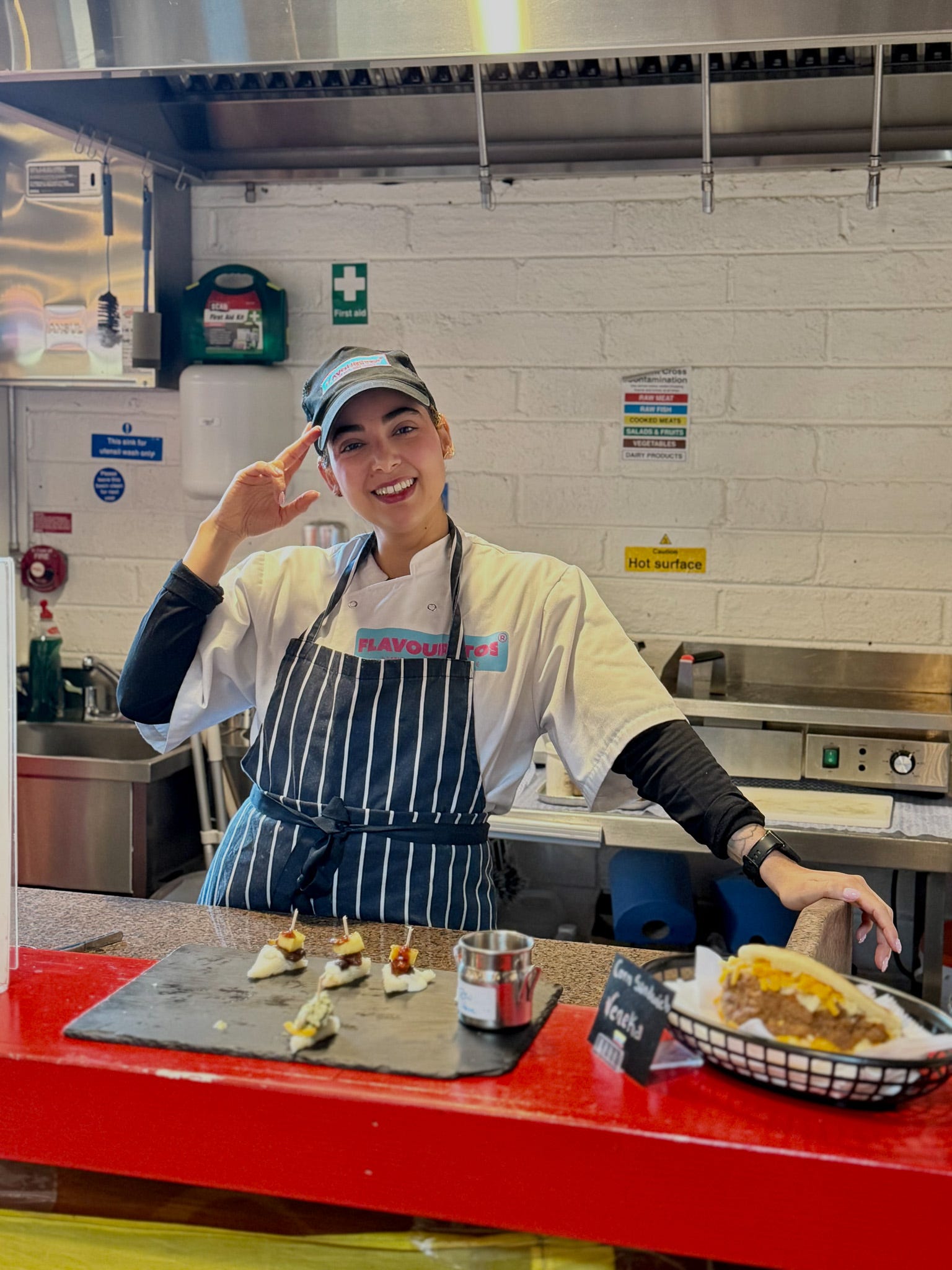
Our lunch is in Flavouritos, where the chef is Marian Garcia Vivolo and we’re here to try her riffs on traditional Venezuelan food, but done Marian’s way. Set alongside Bless Up (African and Caribbean), Seoul Kitchen from Korea, Zaira (“Lebanese with a Brazilian twist”), Park 27 (Thai Street Food) and many others, we are drawn to Flavouritos by the chef’s urging that we just have to try some tastes of Venezuela. Who could resist?
Venezuelan food is a true criollo cuisine, an historical meld of Latin American, Mediterranean and African, although criollo actually translates as “of the land.” “Criollo encompasses all the elements of our culture, from food to music, that are the unique products of the mingling among Indians, Africans and Europeans in the New World. Those of us born and raised in Latin America are joined together by a feeling of being criollo, of being of this land,” writes Marciel E. Presilla in her magisterial book, Gran Cocina Latina.
Marian has to create her own criollo cooking because she can’t source some of the specific peppers and other ingredients that you might taste in Caracas. And so, in Tallaght, when you order the Pabellón Criollo, the beef dish that is the national dish of Venezuela, what you get is beef that has been slow-cooked and then shredded.
The shredding, according to tradition, must be done so carefully that “the meat should be shredded thin as a fly’s legs” so this is a serious business. But Marian’s USP is the fact that she serves the meat, paired with black beans, plantains and a pillow of cheese, in an arepa, instead of on a plate with a scoop of rice. It’s a beautiful thing to behold, and to eat.
Of course, you can’t head down Latin America way without enjoying an empanada, the hand-held-pie that finds national variations in every Latin American country. Marian’s empanadas are pure gorgeous.
As you eat the Pabellón and the empanadas, you might need to pinch yourself that you are, indeed, still in Tallaght, still in Ireland, and busy working on that Master’s degree in International Relations in the very best way: by eating great food.
Related:


This idea of food as a pathway to understanding is genuinely powerful. The bit about how Marian adapts traditional recipes using local ingredients because she can't find Venezuelan peppers in Tallaght says alot about immigrant food culture. I've tasted that exact adaptation process firsthand when my Venezuelan coworker made arepas for a potluck last year, totally changed how I think about "authenticity" in cooking. The Priory Market sounds like one of those rare places where diversity actually works through shared space and tables.